
Dr. Sirisha Subbareddy
Profile - Energy and Materials Laboratory
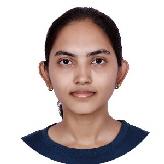
December 2024 - PhD Student
PhD project: Integrated PV-AEM Electrolyzer System for Efficient Green Hydrogen Production
sirisha.subbareddy@unitn.itBiography and Research Activities
I completed my Master’s degree in Physics with a specialization in Solid State Physics at the University of Mysore, where my research focused on synthesizing and analyzing metal halide perovskites,
metal-organic frameworks, and nanocomposites, particularly for applications in sensing and catalysis. Prior to this, I obtained my Bachelor’s degree from NMKRV College for Women in Bangalore, which
sparked my interest in computational material analysis and energy research. My interdisciplinary approach, combining experimental, computational, and theoretical insights, is driven by a commitment
to sustainable and impactful innovations in materials science and energy solutions.
I am currently a PhD student working on an Integrated PV-AEM Electrolyzer System for Efficient Green Hydrogen Production under the guidance of Professor Narges Ataollahi and Professor Paolo Scardi.
PhD Activities
-
Research and Innovation Activity
During my first year, my research focused on developing an atomistic and diffraction-based understanding of nanomaterials relevant to catalytic and electrochemical environments,
Click to expand the text
with the objective of directly supporting the broader PhD theme of advancing Integrated PV-AEM electrolyzer systems for efficient green hydrogen production. Materials such as ceria (CeO2) and palladium (Pd) play an important role in hydrogen-related processes, including water dissociation, oxygen transport, interfacial charge transfer and structural stability under operating conditions, making them central to the objective of improving catalyst efficiency and durability. Through a series of computational and modelling investigations - combining molecular dynamics (MD), thermal diffuse scattering (TDS) analysis, Debye scattering equation (DSE) simulations and Rietveld refinements - I have achieved the first objective of my PhD, which was to establish a robust multiscale workflow capable of probing atomic vibrations, defect interactions, anharmonic lattice behaviour and size-dependent structural effects. This methodology now provides a solid foundation for pursuing the next objectives, which focus on linking atomistic behaviour with catalytic performance, proton/anion mobility and long-term stability in hydrogen production devices. A major part of the work involved a comprehensive study on the atomistic origins of structural dynamics of CeO2, defect chemistry, and vibrational behaviour in ceria (CeO2), a material with important implications for catalytic processes relevant to hydrogen production and oxygen-ion transport. Using a combination of molecular dynamics (MD), thermal diffuse scattering (TDS) modelling, Debye scattering equation simulations, and density functional theory (DFT), I developed an integrated approach to describe how CeO2 responds structurally over temperatures ranging from 300 K to 2200 K. Through the implementation of the Sakuma correlated-motion model in TOPAS, I was able to refine MSDs, MSRDs, and correlation coefficients across 83 coordination shells, revealing strong anharmonicity and complex correlation behaviour within the oxygen sublattice. Complementary pair-distribution and cumulant analyses confirmed that oxygen atoms dominate thermal disorder, while cerium provides structural rigidity. These results offer a deeper mechanistic understanding of vacancy formation, oxygen mobility, and lattice flexibility - properties central to the catalytic and electrochemical relevance of ceria. A second major component of my research explored the interplay of nanoparticle size, oxygen vacancies, and hydration on the structural behaviour of CeO2 nanoparticles using reactive MD simulations (ReaxFF). By simulating nanoparticles between 2 and 20 nm under both vacuum and water-exposed conditions, and refining their diffraction patterns through Debye scattering and TOPAS analysis, I demonstrated how water adsorption can reverse the usual size-dependent lattice expansion observed in nanoceria. This reversal originates from vacancy passivation, hydroxyl formation, and surface atomic relaxation. These findings provide valuable insight into how ceria behaves in alkaline or humid environments like those encountered in AEM electrolyzers, where defect chemistry and hydration strongly influence catalytic stability and ionic transport. This work is now in preparation for publication. Furthermore, I extended this MD-diffraction workflow to metallic systems by studying Pd nanospheres ranging from 4 nm to 30 nm. After generating atomic configurations via EAM-based MD and computing their diffraction profiles using the Debye scattering equation, I applied Rietveld and WPPM refinement to extract lattice parameters, Debye-Waller factors, microstrain and particle-size distributions. The simulations showed pronounced lattice contraction and enhanced atomic displacement in the smallest Pd nanoparticles, effects attributed to strong surface-induced stress and reduced coordination. As particle size increased, all structural parameters approached bulk-like limits, validating classical size-scaling laws. The near-perfect correlation between MD diameters and TOPAS-refined domain sizes also confirmed the robustness of the simulation-refinement protocol. These insights are directly relevant to hydrogen-related catalysis, as Pd-based materials are widely used for hydrogen dissociation, diffusion and storage, and their nanoscale structural behaviour strongly influences catalytic efficiency and durability. In support of my scientific development, I attended two professional training events, the Hackathon: Porting and Optimization of Hunter, which enhanced my ability to efficiently deploy and optimize scientific codes on high-performance architectures, and the International Workshop on Powder Diffraction, which strengthened my understanding of the diffraction modelling techniques that I applied throughout my research. In the second year, I will extend my atomistic modelling work toward materials and interfaces directly relevant to PV-AEM electrolyzer operation. Building on the methodologies developed for nanocrystalline CeO2 and Pd, I will simulate catalyst surfaces under realistic electrochemical conditions, including hydration, defects and reaction intermediates. High-performance computing resources will be used to study larger, more complex oxide-metal interface models and to link atomistic behaviour with catalytic performance. The goal is to develop predictive models that support the design of efficient and durable catalysts for green hydrogen production.
Research output
During my first year, I produced substantial scientific results across atomistic simulations, diffraction modelling and materials analysis.
Click to expand the text
The integrated MD-TDS-DFT study of CeO₂, together with the investigation of ceria nanoparticle chemistry in the presence of water and oxygen vacancies, has generated novel insights into oxygen-sublattice anharmonicity, correlated atomic motion and hydration-induced structural reversal; these results are currently being prepared for publication in a peer-reviewed journal. The Pd nanosphere study delivered a full atomistic and diffraction-based characterization of size-dependent structural behaviour, providing valuable datasets and modelling frameworks for future publications. I also shared my work and improved my technical skills by taking part in the Hunter optimization hackathon and the International Workshop on Powder Diffraction.
- papers (NO)........................
- conference.........................
1st year
Contacts
Address:
Department of Civil, Environmental & Mechanical Engineering
University of Trento
38123 via Mesiano 77, Trento
Italy
External Links
© All rights reserved EMAT LAB 2023